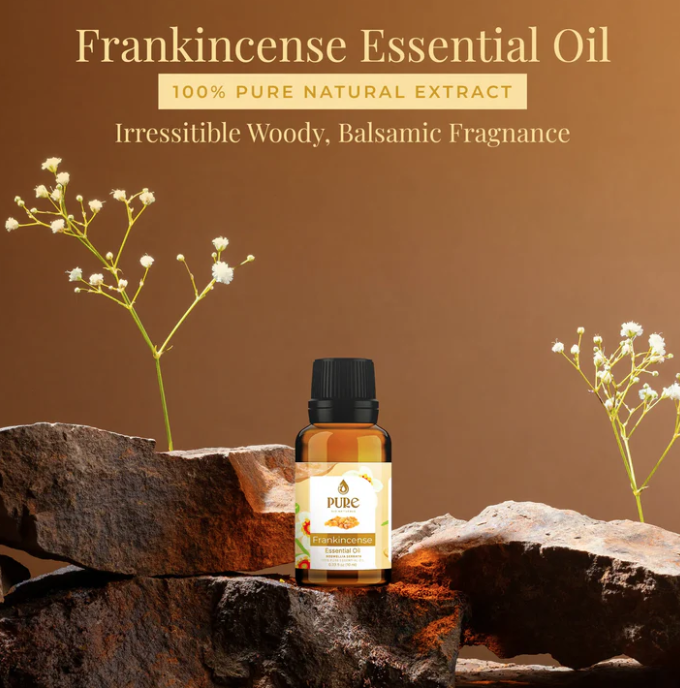
Frankincense Essential Oil: Benefits, Uses and How It Is Made
Share
Frankincense is the only resin in most people's collection, and resins behave differently from flowers and leaves. It does not come from a petal or a peel. It comes from a wound in a tree, deliberately made, and the oil is distilled from the hardened sap that seals it.
Not only that, but it is also one of the oldest traded goods in the world, which is the part everyone knows, and one of the few oils that genuinely improves in the first year, which almost nobody mentions.
Frankincense at a glance
|
Detail |
Frankincense |
|---|---|
|
Also known as |
Olibanum |
|
Botanical name |
Boswellia serrata, Indian frankincense |
|
Plant family |
Burseraceae |
|
Part used |
Hardened tree resin, called tears |
|
Extraction |
Steam distillation |
|
Perfumery note |
Base |
|
Aroma |
Warm, dry and resinous with a light citrus top |
|
Blends with |
Sweet orange, bergamot, lemon, lavender, cedarwood, vetiver, patchouli, rose |
|
Packaging |
Amber glass, which slows light damage |
|
Typical size |
10 ml |
|
Shelf life |
Up to 3 years, and many find it rounder after the first year |
How frankincense is actually made
Harvesters cut into the bark of a Boswellian tree. The tree responds the way most plants do, by seeping a milky sap to seal the wound. Over a few weeks that sap hardens into pale lumps, which the trade calls tear. The tears are collected by hand, graded, and steam distilled into oil.
A single tree is tapped several times across a season, and a tree needs years between heavy harvests to recover. That is slower and more labour-intensive than cutting a field of lavender, and it is most of why frankincense sits where it does on price.
It also explains the smell. Frankincense is warm, dry and resinous, a little like incense smoke without the smoke, with a faint citrus brightness on top. People expecting something sweet or floral are usually surprised by how clean it is.
Which frankincense found
Several Boswellia species are distilled and they smell noticeably different. If you have used frankincense before and found it unlike what you expected, species is the likely reason.
|
Species |
Where from |
Character |
|---|---|---|
|
Boswellia serrata |
India |
Sharper and greener, with more citrus lift. The most widely available |
|
Boswellia carterii |
Somalia and Somaliland |
Softer and sweeter, the classic incense profile |
|
Boswellia sacra |
Oman and Yemen |
Closely related to carterii, often sold at a premium |
|
Boswellia frereana |
Somalia |
Fresher and more pine-like, sometimes called Maydi |
Ours is Boswellia serrata. Ask any supplier which species they have. A seller who cannot answer is not one to buy resin from.
Why it gets better, then stops
Most essential oils are at their best on the day they are bottled. Frankincense is one of a small group that settle rather than fade. Over the first year the sharper top notes soften, and the resinous depth comes forward, which is why some perfumers deliberately rest it.
That is not a licence to keep it forever. Three years stored cool and dark is still the sensible limit. Patchouli and vetiver are the two that genuinely keep improving past that.
How to use frankincense
In a facial oil
One to three drops in 30 ml of jojoba, rosehip or argan oil, which is 0.5 to 1 per cent. Frankincense with rose is the pairing most people settle on, and it is the reason both sit in the skincare range.
In a diffuser
Three to four drops per 100 ml of water. As a base note it builds slowly, so give it twenty minutes before deciding whether you want more. Lemon or sweet orange alongside lifts it; lavender and cedarwood take it quieter.
In meditation or yoga
One drop of diluted oil on the inside of each wrist, or a drop on a tissue nearby. Do not apply it neat. The association with ritual use is thousands of years old and is most of why people reach for it in a quiet room.
In a body or massage oil
Six to twelve drops per 30 ml of carrier oil, which is 1 to 2 per cent.
In natural perfume
Frankincense works as a base note that is lighter than patchouli or vetiver, so it adds depth without weight. Useful when a blend needs grounding but not darkening.
Blends that work
|
Blend |
Drops |
Where it suits |
|---|---|---|
|
Frankincense + rose |
2 : 1 |
Facial oil, in 30 ml of rosehip or jojoba |
|
Frankincense + sweet orange |
2 : 3 |
Diffuser, warm and bright |
|
Frankincense + lavender + cedarwood |
2 : 3 : 1 |
Evening, quiet room |
|
Frankincense + lemon |
2 : 3 |
Daytime, cleaner and sharper |
|
Frankincense + bergamot + vetiver |
2 : 3 : 1 |
Natural perfume with depth |
A note on the history
Frankincense was traded along the Arabian incense routes for at least three thousand years, and at points it was worth its weight in gold. It appears in Egyptian, Roman, Jewish, Christian and Islamic ritual, and the tapping method used today is close to the one described in ancient accounts.
What has changed is supply. Boswellia populations in parts of the Horn of Africa are pressured from over-tapping and land clearing, which is worth knowing when a supplier cannot tell you the species or the country of origin.
Safety
- External use only. Do not swallow frankincense oil, and do not add it to food or drink. Some overseas sellers promote internal use. We do not.
- Dilute before skin contact. Use 0.5 to 1 per cent on the face and 1 to 2 per cent on the body.
- Patch test on your inner forearm and check after 24 hours.
- Keep it away from the eyes and inner ears. If oil gets in an eye, wipe it with a carrier oil or full-cream milk rather than water, then seek medical advice.
- Diffuse in a room with airflow, in sessions of 15 to 30 minutes.
- If you are pregnant or breastfeeding, check with your healthcare professional before using it.
- Do not use it on children under two, and halve the adult dilution for older children after checking with a doctor or pharmacist.
- Ask your vet before diffusing around pets, and leave them a way out of the room.
- Store tightly capped somewhere cool and dark, unreachable of children. If any is swallowed, call the Poisons Information Centre on 13 11 26.
Where frankincense fits
If you already own citrus and florals, frankincense adds something neither can: a dry, resinous depth that reads as serious rather than sweet. It is also the easiest base note to like because it does not have patchouli's divisiveness or vetiver's weight.
It sits in the 10 ml collection and in skincare, which reflects the two things people buy it for.
Frequently asked questions
1. Is frankincense the same as olibanum?
Yes. Olibanum is the older trade name for the same resin and the oil distilled from it. You will see both used interchangeably, and a supplier using the older name is usually a sign they know the category.
2. Where does frankincense oil come from?
From resin, not flowers. Harvesters cut the bark of a Boswellia tree, the tree seeps sap to seal the wound, and the sap hardens into lumps called tears over a few weeks. Those tears are collected and steam distilled.
3. Which species of frankincense should I buy?
It depends on the scent you want. Boswellia serrata is sharper and greener with more citrus lift, and is the most widely available. Carterii and sacra are softer and sweeter, closer to classic incense. Frereana is fresher and more pine-like. Ask the supplier which they have.
4. Can I use frankincense on my face?
Diluted, yes, and it is one of the main reasons people buy it. Add 1 to 3 drops to 30 ml of jojoba, rosehip or argan oil and patch test on your inner arm first. Frankincense with rose is the pairing most people settle on.
5. Can I put a drop of frankincense under my tongue?
No. This oil is for external use only. Some overseas sellers promote internal use of essential oils and we do not. Swallowing them can cause real harm.
6. Does frankincense improve with age?
In the first year, usually. The sharper top notes soften and the resinous depth comes forward, which is why some perfumers rest it deliberately. It is not indefinite though. Three years stored cool and dark is still the sensible limit.