Eucalyptus Oil: Uses and Benefits Around an Australian Home
Share
Eucalyptus is the one oil in this range that most Australians already know without being taught. It has been in laundry cupboards here for generations, the smell is in the air after rain, and the trees are out the window. That familiarity is worth something, and it is also why the oil gets treated more casually than it should be.
Eucalyptus oil is a common cause of essential oil poisoning in Australian children. Not because it is unusually dangerous, but because it is unusually common and often stored at hand height. The safety section below is the part of this guide worth reading properly.
Eucalyptus oil at a glance
|
Detail |
Eucalyptus |
|---|---|
|
Botanical name |
Eucalyptus globulus, the blue gum |
|
Plant family |
Myrtaceae |
|
Part used |
Leaves |
|
Extraction |
Steam distillation |
|
Origin |
Australia |
|
Main constituent |
1,8-cineole, also called eucalyptol |
|
Perfumery note |
Top |
|
Aroma |
Fresh, sharp and camphor-like with a woody undertone |
|
Blends with |
Peppermint, rosemary, lemon, tea tree, lavender, cedarwood |
|
Typical size |
40 ml |
|
Shelf life |
Up to 3 years stored cool and dark |
Not all eucalyptus oil smells the same
There are hundreds of eucalyptus species and a handful are distilled commercially. They differ mainly in how much 1,8-cineole they contain, and that one compound is what gives the oil its sharp, cooling character.
|
Species |
Common name |
Character |
|---|---|---|
|
Eucalyptus globulus |
Blue gum |
The familiar one. High cineole, sharp and bracing |
|
Eucalyptus radiata |
Narrow-leaf peppermint |
Softer and slightly sweeter, gentler in a diffuser |
|
Eucalyptus polybractea |
Blue mallee |
Highest cineole of the common three, very sharp |
|
Eucalyptus citriodora |
Lemon-scented gum |
Citronellal rather than cineole. Smells lemony, not eucalyptus-like |
Ours is Eucalyptus globulus, which is the species most people picture and the one that has been distilled in Australia the longest. If you have used a eucalyptus oil that smelled lemony rather than sharp, it was almost certainly citriodora, which is a different thing wearing the same name.
Why the bottle is 40 ml
Eucalyptus does not get used a drop at a time. It goes into laundry rinses, floor water and steam bowls, which consumes oil considerably faster than a diffuser does. At 40 ml it sits alongside tea tree as one of two oils in the 40 ml range, and the per-use cost is a fraction of a 10 ml bottle.
How Australian households actually use it
Laundry
Three to five drops in the rinse cycle, or on a wool dryer ball. This is the use most people here grew up with and it is still the most common reason the bottle gets bought. It leaves a clean scent on towels and linen.
Floor and bench water
Ten drops in a bucket of warm water. For a surface spray, ten drops in 100 ml of water with a teaspoon of vodka or witch hazel to help the oil disperse, shaken before each use because oil and water separate.
Worth saying plainly: this is a scent, not a disinfectant. Eucalyptus oil is not registered as one and we do not sell it as one. Where killing germs matters, use a registered disinfectant and follow its label.
Steam bowl
One to two drops in a bowl of hot, not boiling, water. Keep your eyes shut and your face far enough away to be comfortable. Not for children.
Shower
A few drops on the shower floor away from the direct stream. The heat lifts the scent as you wash, and it is the easiest version of the steam bowl.
Diffuser
Four to five drops per 100 ml of water. The scent is strong and travels fast, so start low. It suits a laundry, bathroom or home office better than a bedroom.
Massage blend
Six to twelve drops per 30 ml of carrier oil, which is a 1 to 2 per cent dilution. Peppermint or rosemary alongside it is the usual combination after exercise.
Dilution at a glance
|
Use |
Amount |
|---|---|
|
Diffuser |
4 to 5 drops per 100 ml water |
|
Laundry rinse |
3 to 5 drops |
|
Floor water |
10 drops per bucket |
|
Surface spray |
10 drops per 100 ml water plus a teaspoon of witch hazel |
|
Body or massage oil |
6 to 12 drops per 30 ml carrier oil |
|
Steam bowl (adults only) |
1 to 2 drops |
Safety, and why this one matters more
Eucalyptus deserves more care than most oils, and nearly all the risk comes down to two things: children swallowing it, and pets.
- External use only. Do not swallow it. Swallowing even a small amount can be serious, particularly for a child.
- Store the bottle up high, capped tightly and out of sight. This is the single most effective thing you can do, and most poisoning cases are a storage problem rather than a usage one.
- If a child swallows any amount, call the Poisons Information Centre on 13 11 26 straight away, or 000 in an emergency. Do not wait to see whether symptoms appear and do not try to make them vomit.
- Never apply eucalyptus to the face, nose or chest of a baby or young child. 1,8-cineole can cause breathing difficulty in small children.
- Do not use it on children under two at all. For older children, keep the concentration low, keep it away from the face, and ask a doctor or pharmacist first.
- Dilute before skin contact, at 1 to 2 per cent, which is 6 to 12 drops per 30 ml of carrier oil. Patch test on your inner forearm and wait 24 hours.
- Keep it away from the eyes and broken skin. If oil gets in an eye, wipe it with a carrier oil or full-cream milk rather than water, then seek medical advice.
- If you have asthma or another respiratory condition, speak to your doctor first. A strong scent can trigger symptoms in some people.
- Diffuse in a room with airflow, in sessions of 15 to 30 minutes rather than continuously.
- If you are pregnant or breastfeeding, check with your healthcare professional before using it.
- Eucalyptus is toxic to cats and dogs. Do not apply it to a pet, keep it out of their reach, and ask your vet before diffusing in a home with animals.
- Store away from heat and open flames. Essential oils are flammable.
What eucalyptus blends with
Eucalyptus is assertive, so use less of it than whatever you pair it with. It works with peppermint, rosemary, lemon, tea tree, lavender and cedarwood.
A reliable laundry and cleaning blend is three drops of eucalyptus to two of lemongrass. For a bracing morning diffuser, two of eucalyptus to three of rosemary.
Buying eucalyptus oil in Australia
Eucalyptus is one of very few oils where Australia is the origin rather than the destination, which means local buyers have an easier time getting a straight answer about provenance than they do with most imports. Ask for the species and the country of distillation. A supplier who can tell you both is usually worth buying from.
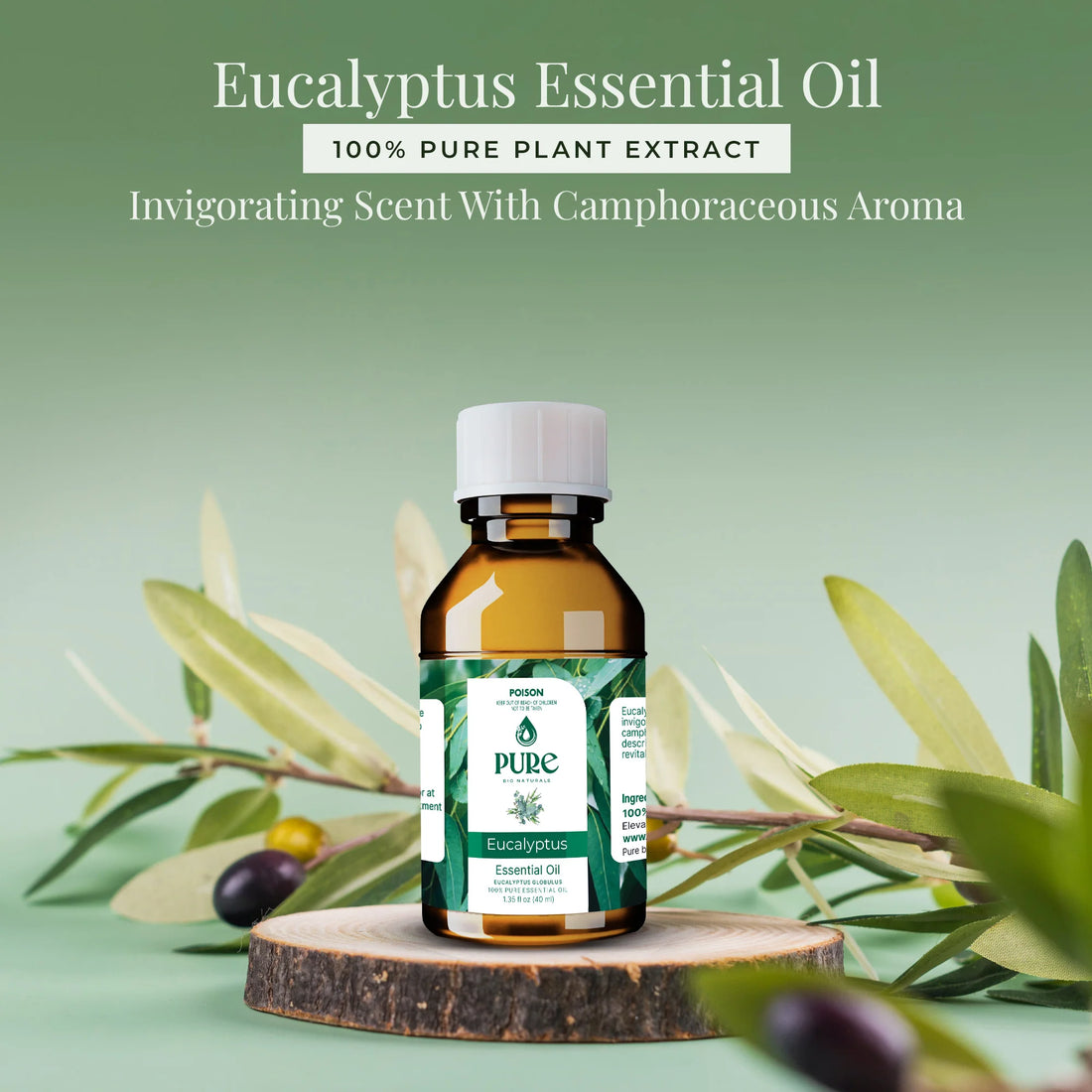
Our eucalyptus oil is Eucalyptus globulus, steam distilled from Australian-grown leaves, in a 40 ml bottle. It sits in the aromatherapy range alongside the other household oils.
Frequently asked questions
1. Can I use eucalyptus oil around my baby?
No. Keep it away from the face, nose and chest of babies and young children, and do not use it on children under two at all. The compound that gives eucalyptus its sharpness, 1,8-cineole, can cause breathing problems in small children. Talk to your doctor or pharmacist before using it around older children.
2. What should I do if someone swallows eucalyptus oil?
Call the Poisons Information Centre on 13 11 26 immediately, or 000 in an emergency. Do not wait to see if symptoms appear and do not try to make the person vomit. Eucalyptus oil is a common cause of poisoning in Australian homes, which is why the bottle belongs up high and out of sight.
3. Is eucalyptus oil a disinfectant?
We do not sell it as one, and it is not registered as a disinfectant. It is a traditional household scent that works well in laundry rinses, floor water and surface sprays. Where killing germs matters, use a registered disinfectant and follow its label.
4. How do I use eucalyptus oil in the laundry?
Three to five drops in the rinse cycle, or on a wool dryer ball. It is the use most Australian households know it for, and it leaves a clean scent on towels and linen.
5. Is eucalyptus oil safe for cats and dogs?
No, it is toxic to both. Keep the bottle unreachable, never apply it to an animal, and check with your vet before diffusing it in a home with pets. If you do diffuse, leave the door open, so an animal can leave the room.
6. Which eucalyptus species is best?
It depends on what you want. Eucalyptus globulus, the blue gum, is the familiar sharp one and the most widely used. Eucalyptus radiata is softer and gentler in a diffuser. Eucalyptus citriodora smells lemony rather than eucalyptus-like because it contains citronellal rather than cineole.